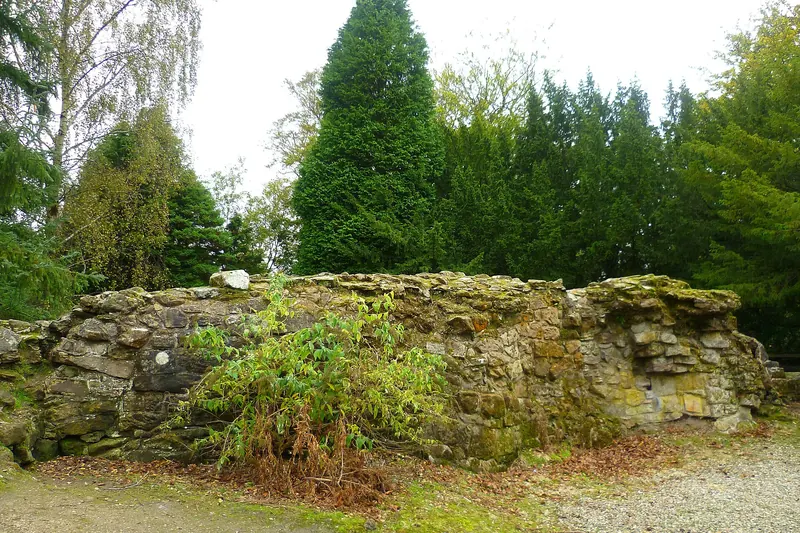
Pittencrieff Park (the Glen)
Through Carnegie’s gift to the town, from the Louise Carnegie Gates past the statue and Glen Pavilion, down to the Double Bridge and Malcolm Canmore’s Tower.
-
1
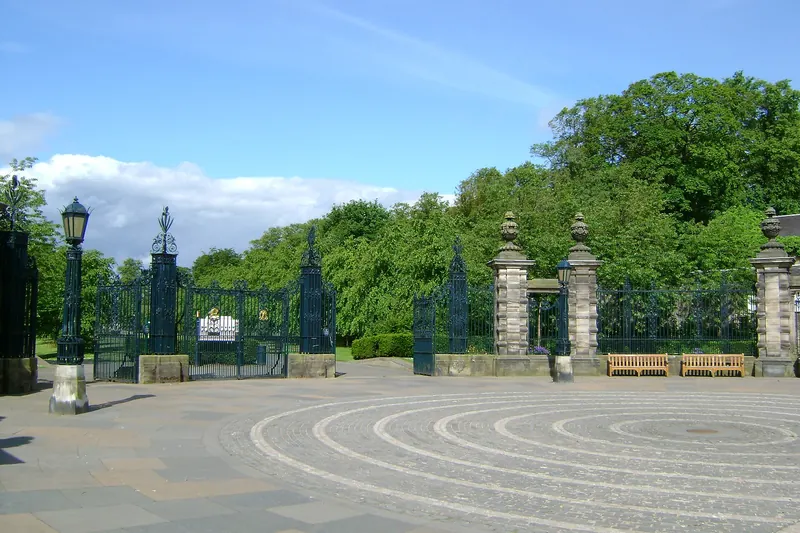
Louise Carnegie Memorial Gates
Gateway · 1927–29 · Category A listed building
The grand wrought-iron entrance to Pittencrieff Park, by Jamieson and Arnott with ironwork by Thomas Hadden.
↓ About 150 m to the next stop
-
2
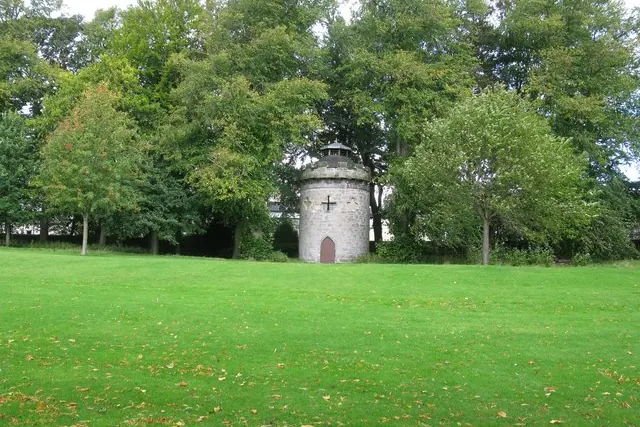
Pittencrieff Dovecot
Dovecot · Late 18th or early 19th century · Category B listed building
A round, crenellated Gothick dovecot built for Pittencrieff House.
↓ About 220 m to the next stop
-
3
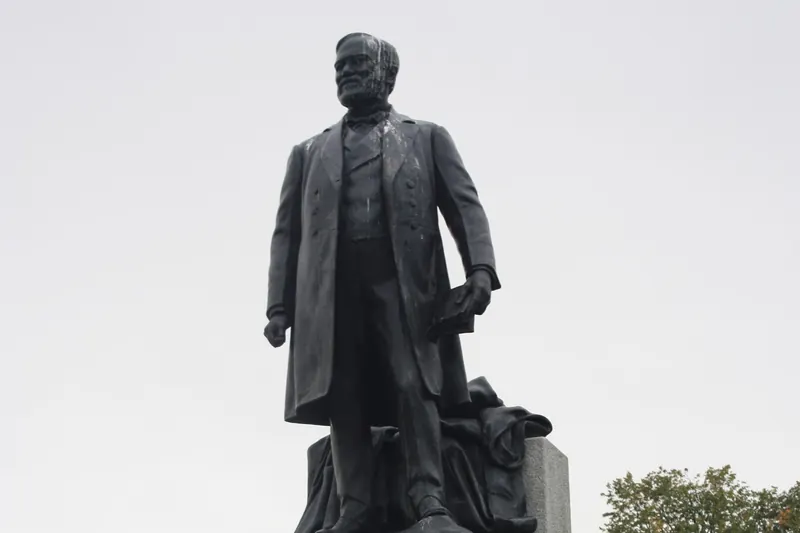
Statue of Andrew Carnegie
Statue · 1914 · Category B listed building
Richard Goulden’s bronze of Carnegie, paid for by public subscription while he was still alive.
↓ About 300 m to the next stop
-
4
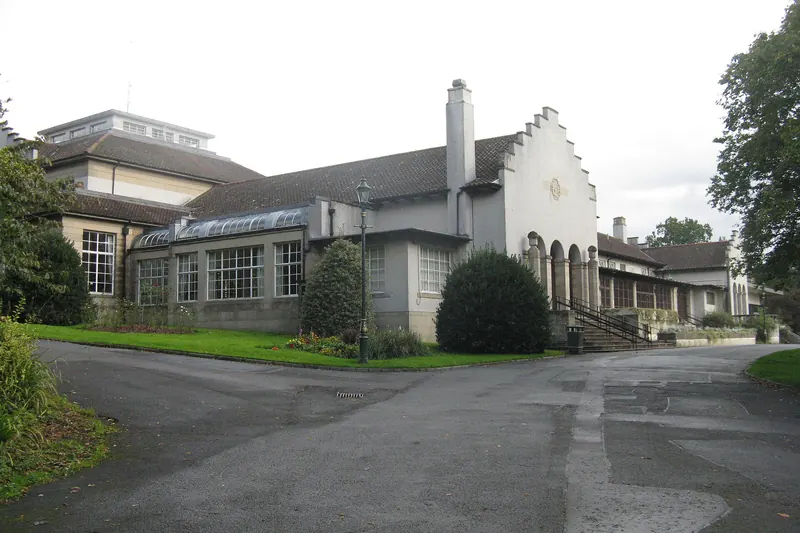
The Glen Pavilion
Pavilion · 1926–27 and 1934 · Category B listed building
A Cape Dutch-style cafeteria and music pavilion with Art Deco touches, by John Fraser.
↓ About 190 m to the next stop
-
5
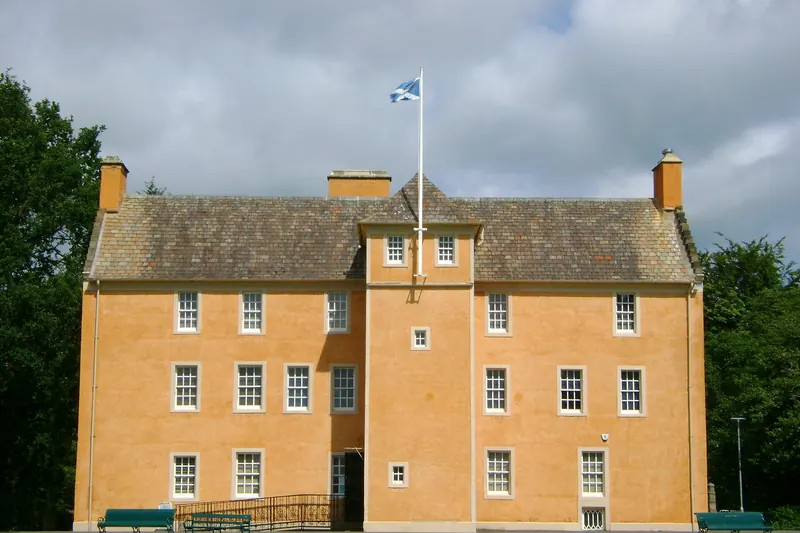
Pittencrieff House
Laird’s House · Earlier-to-mid 17th century · Category A listed building
A 17th-century laird’s house at the heart of the park, remodelled inside by Robert Lorimer.
The Carnegie Dunfermline Trust says the house has been closed to the public for several years and that it is working to reopen it.
↓ About 140 m to the next stop
-
6
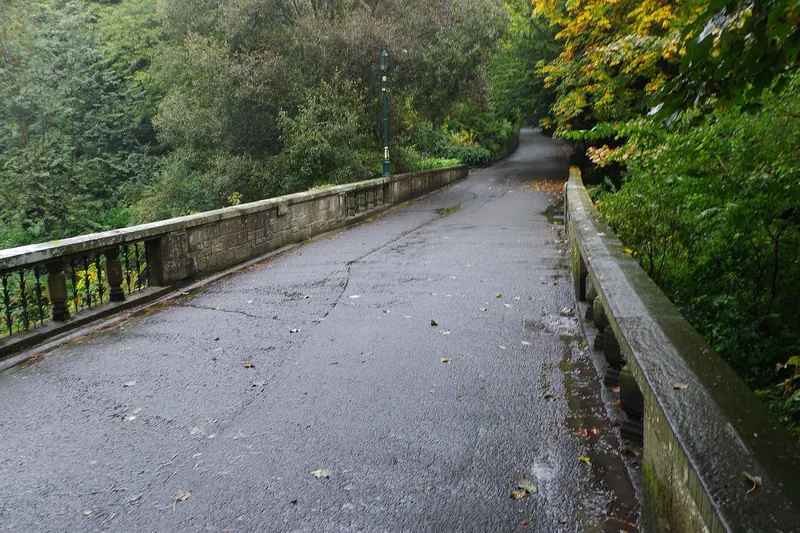
Tower Bridge (the Double Bridge)
Bridge · 1611 and 1780 · Category B listed building
A bridge built on top of a bridge over the Tower Burn: a 1611 arch with a 1780 one above it.
↓ About 120 m to the next stop
-
7
Malcolm Canmore’s Tower
Tower Remains · Possibly 12th–13th century · Scheduled monument
The foundations of a tower traditionally said to be Malcolm III’s residence, on a crag above the Tower Burn.